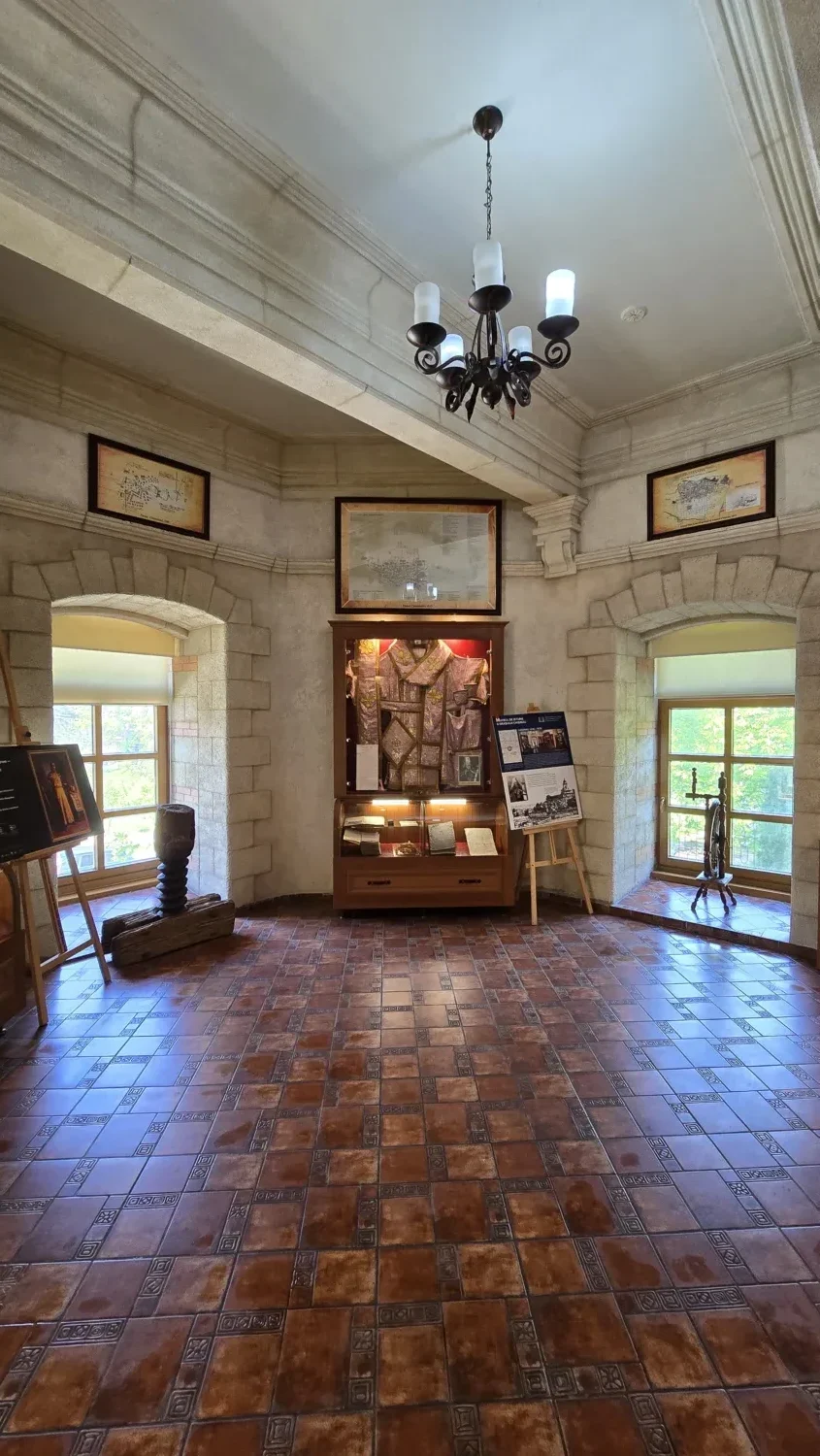
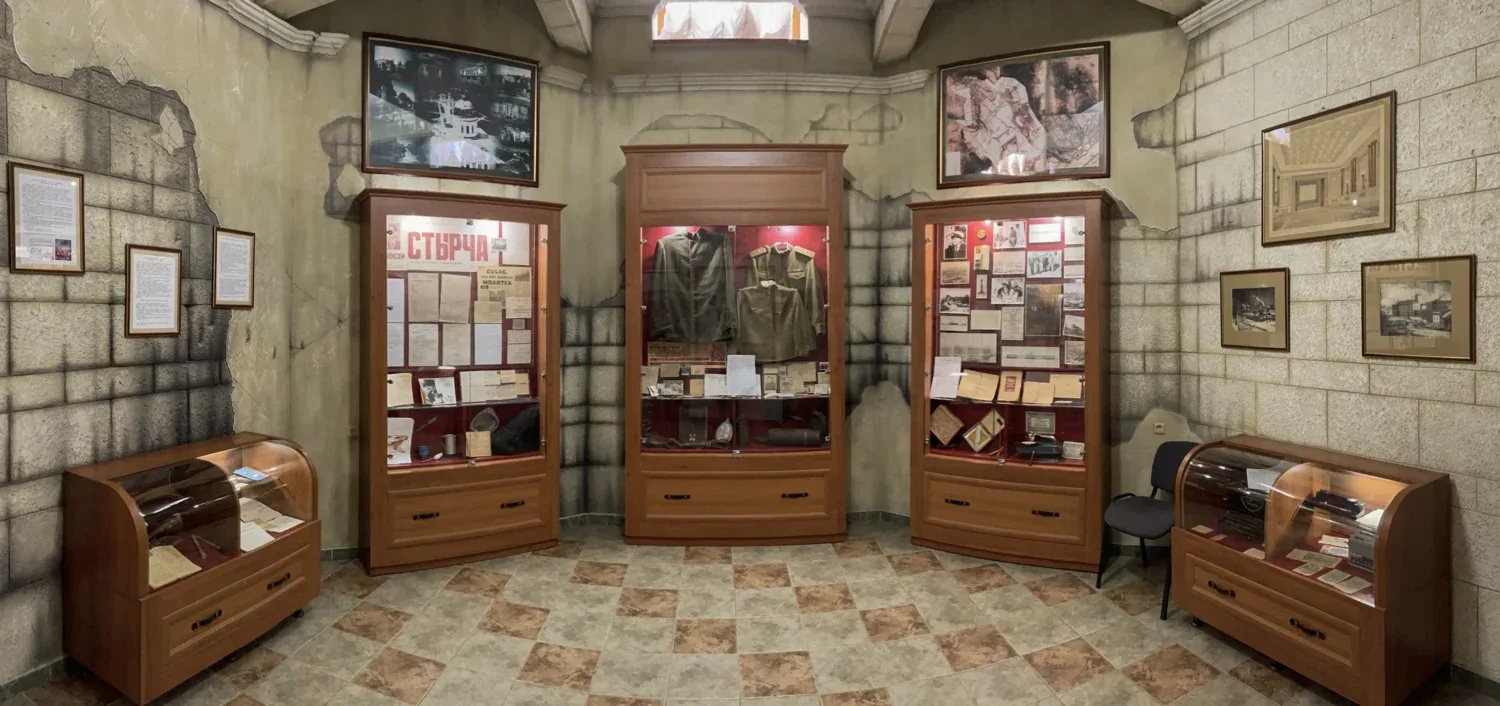
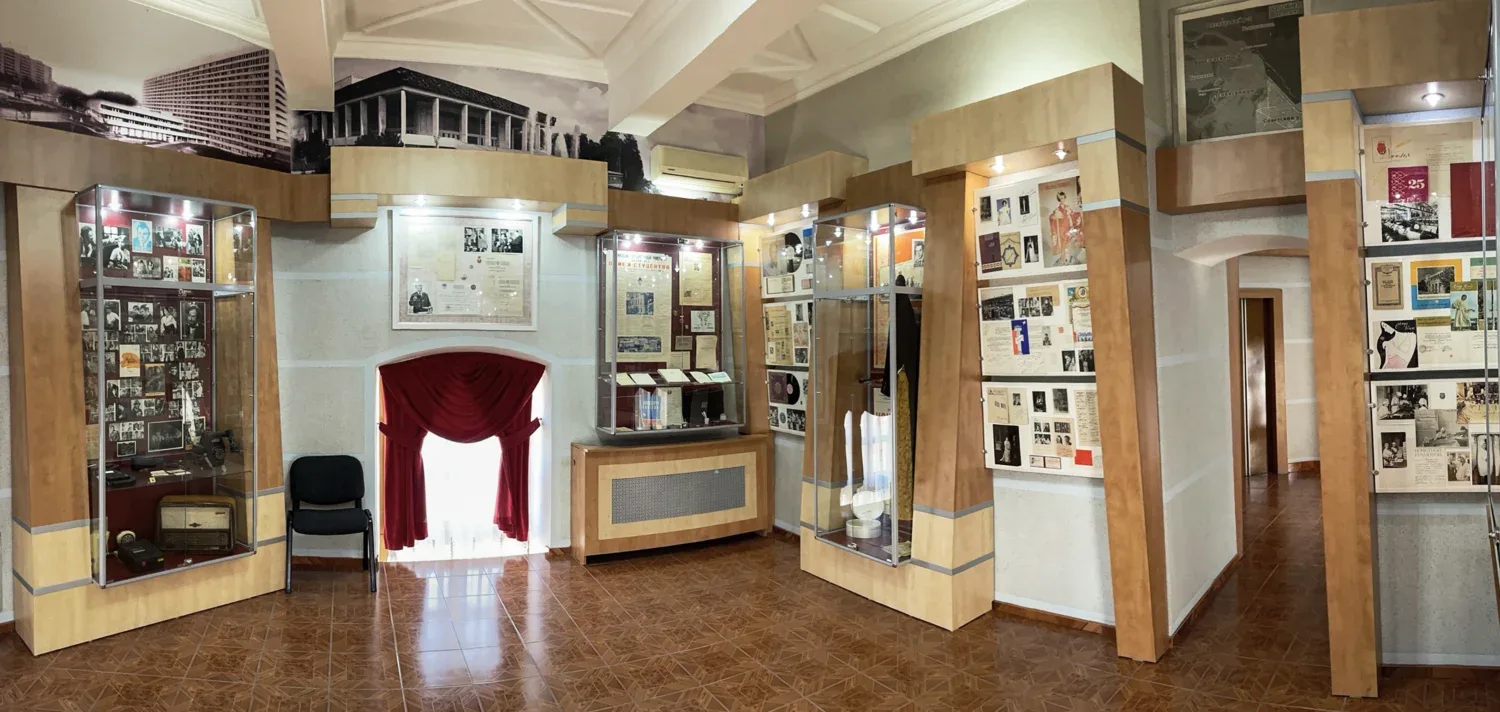
Hall II of the exhibition traces the development of Chișinău from 1873 to 1918, a period during which the city gradually took on the character of a major administrative, economic, and cultural center of the Bessarabia Governorate within the Russian Empire.
During this period, local industry developed, particularly in the metalworking and agricultural processing sectors. Notable among these were Ștefan Sârbu’s metallurgical plant, as well as numerous workshops and factories that contributed to the modernization of the urban economy.
The construction of railroads played a key role in the city’s development, integrating Chișinău into the Russian Empire’s transportation network. The Chișinău–Tiraspol railway line was inaugurated in 1871, and the Chișinău railway station was built according to a design by architect N. Lonski.
Urban transportation also underwent significant development. In 1889, the horse-drawn tram was introduced, and in 1913 it was modernized and converted into an electric tram, contributing to the development of urban mobility.
Mayor Carol Schmidt, who led the municipal administration from 1877 to 1903, played a key role in the city’s modernization. During his tenure, numerous urban modernization, infrastructure, and public works projects were carried out, which contributed to the transformation of Chișinău into a modern city.
An important role in these transformations was played by the collaboration between Mayor Carol Schmidt and the city architect Alexandru Bernardazzi, the designer of several architectural and urban planning projects that shaped the image of Chișinău in the late 19th century.
During this period, the city’s water supply system was designed and built, and two water towers were built to support its operation: one on Livezilor Street (now Alexei Mateevici Street), a structure designed by Alexandru Bernardazzi, and another on Cupeceasca Street (now Vasile Alecsandri Street). These structures were essential elements of modern urban infrastructure and symbols of Chișinău’s modernization at the end of the 19th century.
The museum's collection includes a personal folder belonging to Carol Schmidt from 1877, which was donated by industrialists in the meat-processing industry.
The permanent exhibition features original maps of the city from 1877, 1909, and 1914–1917, which illustrate how Chișinău expanded and modernized in the late 19th and early 20th centuries.
The city’s development was accompanied by the establishment of important educational and cultural institutions. In the 1880s, Boys’ Gymnasium No. 1 was built (today the headquarters of the National Museum of the History of Moldova), as well as Boys„ Gymnasium No. 3 (today a building of the Academy of Music, Theater, and Fine Arts). In 1900, the ”Princess Natalia Dadiani” Girls’ High School was inaugurated; the building now houses the National Art Museum of Moldova. At that time, the language of instruction in educational institutions was Russian, in accordance with the educational policies of the Russian Empire.
Chișinău is also becoming an important center of cultural and intellectual life. Figures such as Bogdan Petriceicu Hașdeu and the poet Alexei Mateevici have lived or worked in the city.
Among the cultural institutions of the era were the House of the Nobility (1886) and the Diocesan House (1911). Three important museums were also in operation during that period: the Zemstvo Museum (today the National Museum of Ethnography and Natural History), the Ecclesiastical Museum, and the Pontic Museum, the latter two of which have not survived to the present day.
The city’s architecture has undergone significant development, influenced by various European styles. Many buildings from this period feature Neo-Gothic elements—a favorite of architect Alexandru Bernardazzi—as well as Baroque and Oriental influences. Notable examples include the Chișinău City Hall (1902), designed by architect Mitrofan Elladi, the Diocesan House, the Municipal Bank, the Herța House, designed by architect Lonski, as well as the Zemstvo Museum building, constructed in an Oriental style based on a design by architect Vladimir Țîganco.
At the beginning of the 20th century, Chișinău became a modern city, with its industry, urban infrastructure, educational system, and cultural life all flourishing, shaping the image of a dynamic regional capital.