

Pocket watch, early 20th century

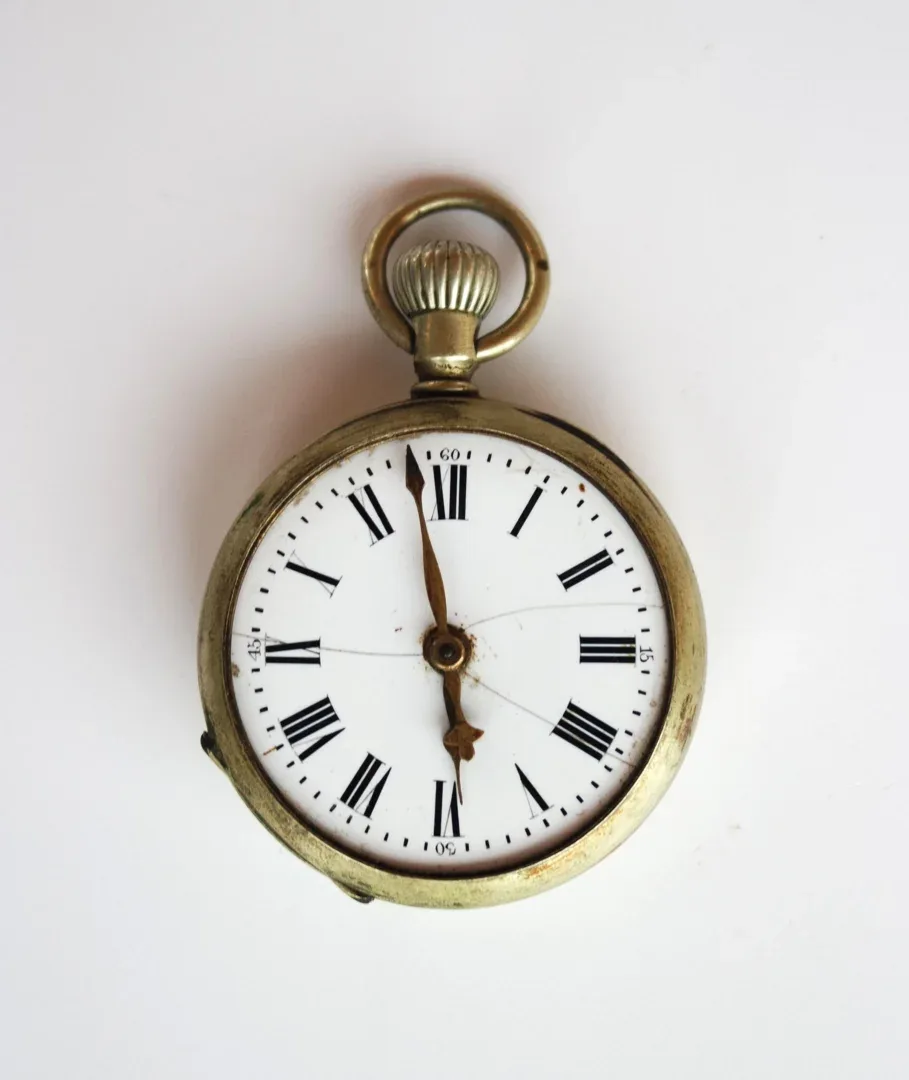
Pocket watch, early 20th century
Heritage
This early 20th-century German pocket watch is a timepiece classified as a personal item with both a practical function and symbolic status. The piece reflects the advanced level of German mechanical engineering during the late industrialization period, when the production of precision watches became a competitive field at the European level. Its internal mechanism, typical of early 20th-century German production, illustrates the precision of watchmaking engineering and the standardization of mechanical components. Such clocks were often produced in specialized industrial centers, where the traditional craft of clockmaking was combined with modern production technologies.
In the city of Chișinău, it was a portable accessory intended to be worn on the person, commonly found in men’s clothing of the era. The metal casing—typically made of durable alloys or precious metals, depending on the owner’s social status—protected the internal mechanism, highlighting a focus on durability and functionality in everyday use.
From a sociocultural perspective, the pocket watch played an important role in defining urban male identity, as it was associated with punctuality, discipline, and professional status. It was not merely a tool for measuring time, but also a symbol of personal prestige, often worn visibly or attached to a vest by a decorative chain. The piece has significant documentary value, illustrating both the evolution of timekeeping technologies and the cultural transformations of European society in the early 20th century. The pocket watch thus becomes a tangible testament to industrial modernity and to changes in the perception and management of time in everyday life.

