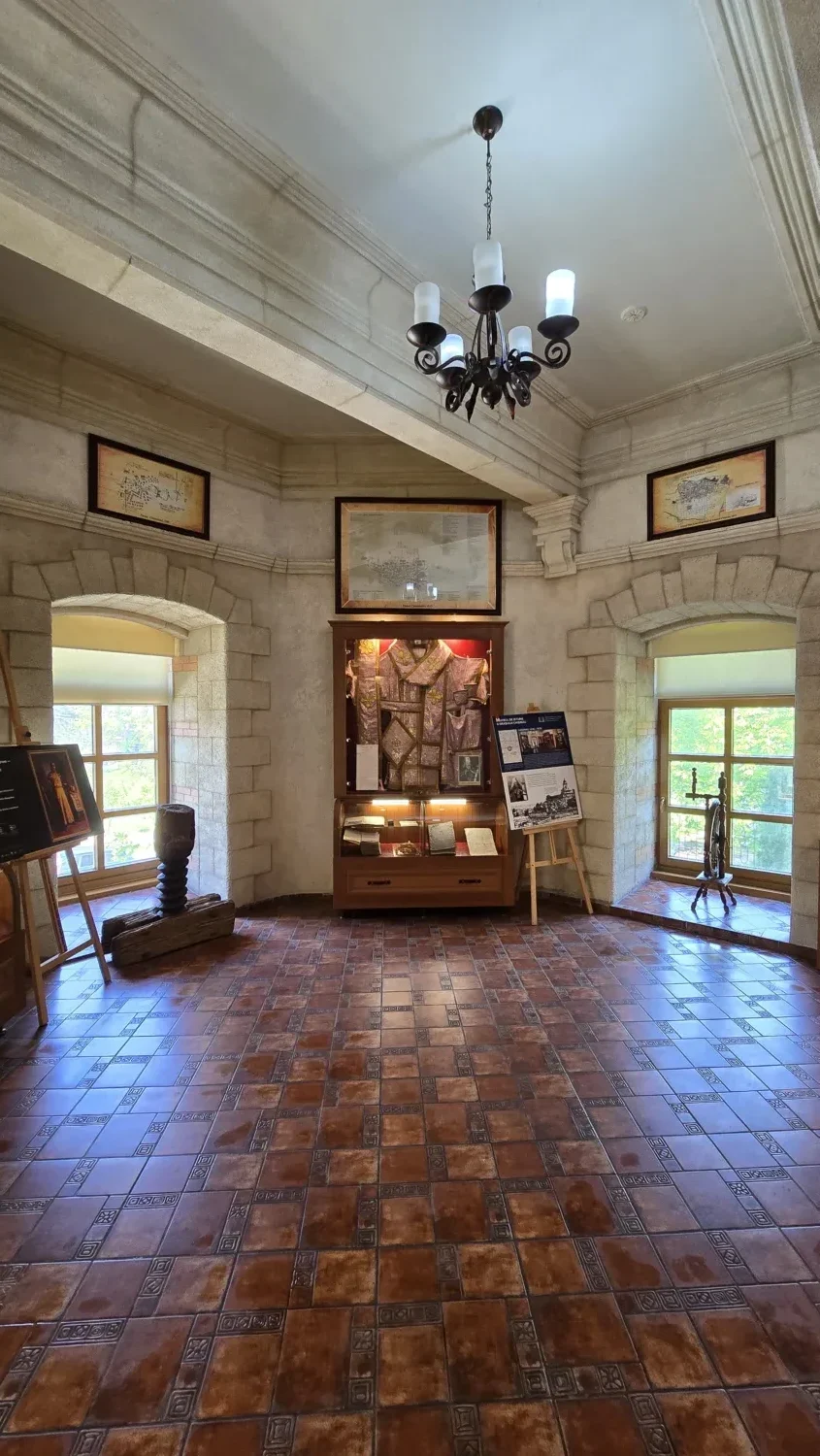
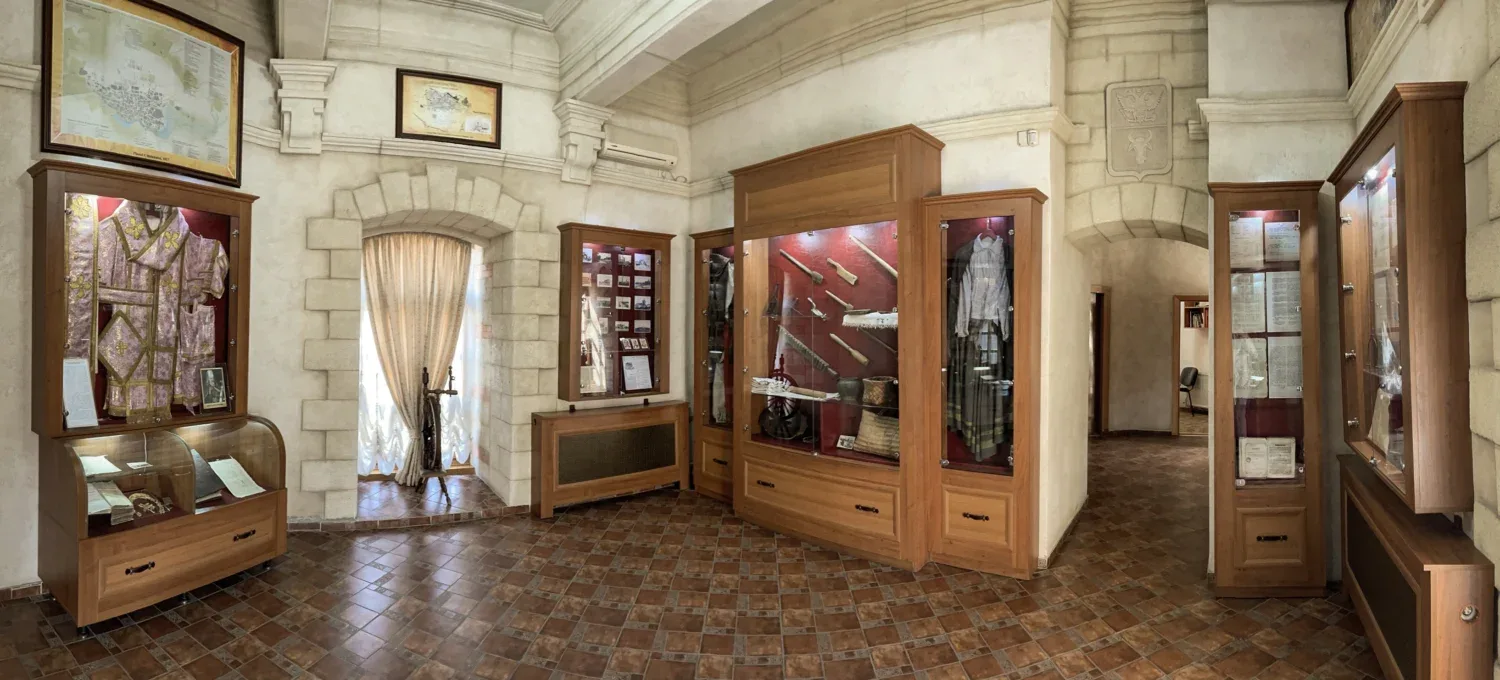
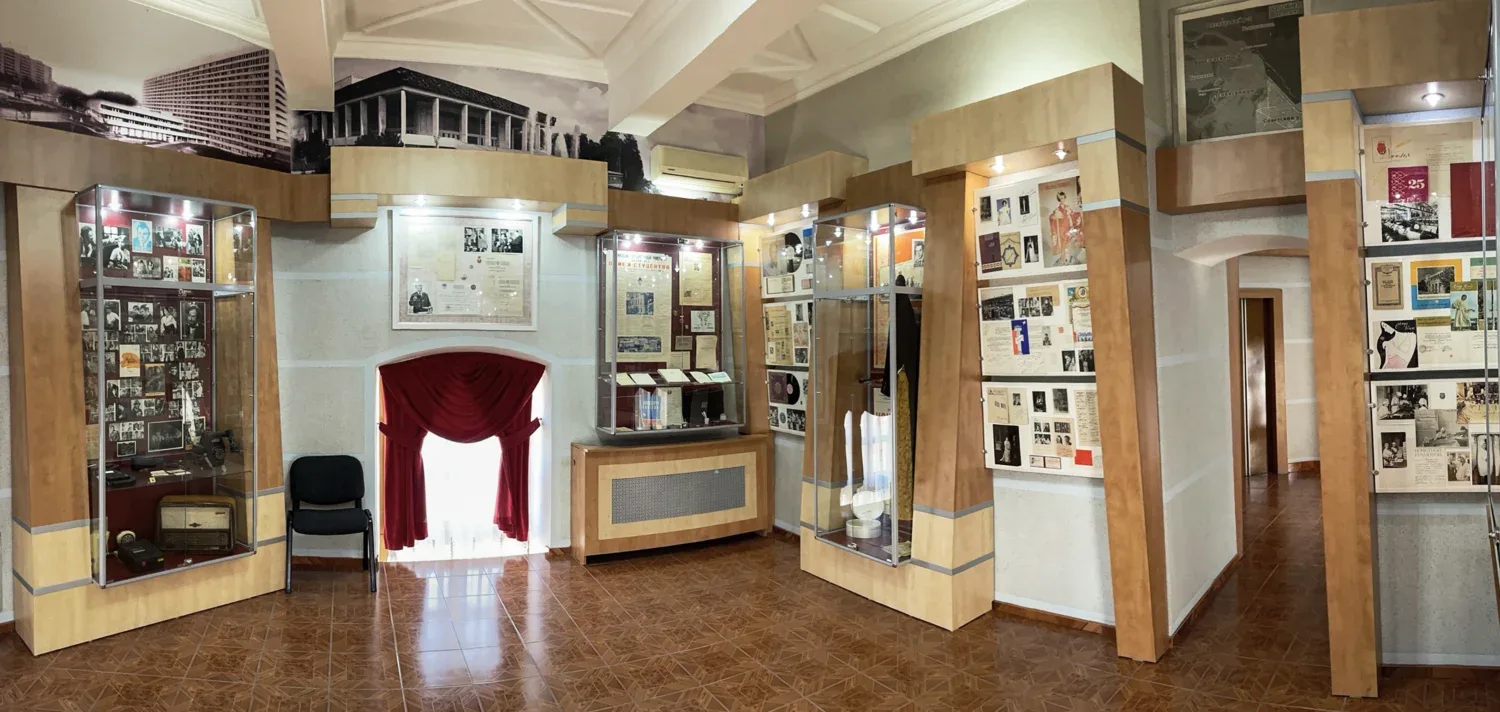
Hall III of the exhibition traces the evolution of Chișinău from 1918 to the early 1950s, a period marked by significant political, social, and cultural transformations. This period encompasses the interwar years, the city’s experiences during World War II, and the reconstruction process in the early postwar years.
On January 24, 1918, amid the collapse of the Russian Empire and the revolutionary upheaval, the Moldovan Democratic Republic was proclaimed, led by the representative body known as the Sfatul Țării. On March 27, 1918, under the chairmanship of Ion Inculeț, the Sfatul Țării voted to unite Bessarabia with Romania, marking the beginning of a new chapter in the region’s history.
During the interwar period, Chișinău became one of Romania’s major urban centers, experiencing significant economic and cultural development. The city was home to numerous enterprises in the food and light industries, such as Cogan’s Mill, the bread factory, the sausage factory, the kvass and lemonade factory, the candy factory, and the shoe factory. During this period, Romania’s national currency—the Romanian leu—was in circulation, and examples of it are on display in the museum’s exhibition.
The city’s public and cultural life was enlivened by numerous exhibitions and events held in the Public Garden, such as agricultural and industrial exhibitions. From one of these events, the museum’s collection includes a certificate awarded to the exhibition’s participants.
The interwar period was also marked by significant developments in the educational and cultural systems. Schools and high schools offering instruction in Romanian and using the Latin alphabet were opened in the city, reflecting Bessarabia’s integration into the Romanian educational system.
A significant milestone in Chișinău’s artistic life was the founding in 1921 of the School of Fine Arts, headed by the sculptor Alexandru Plămădeală, one of the most important figures in Bessarabian art.
On April 29, 1928, in the Public Garden, on the occasion of the tenth anniversary of the founding of the Sfatul Țării and the Union of Bessarabia with Romania, the Monument to Stephen the Great and the Holy was unveiled, created by sculptor Alexandru Plămădeală, and the monument’s pedestal was designed by architect Eugen Bernardazzi.
During this period, Chișinău also became an important center of musical and artistic life. The city was home to the „Unirea” Conservatory, the National Conservatory, and the Municipal Conservatory. Among the students at these institutions were figures such as the famous soprano Maria Cebotari, who brought Bessarabia’s fame to the great stages of Europe, as well as the composer Eugen Coca.
The city’s development was, however, interrupted by the dramatic events of World War II. In 1939, with the signing of the Molotov–Ribbentrop Pact, Europe entered a new period of political and military tensions. Following the Soviet ultimatum in June 1940, Bessarabia was occupied by the Soviet Union, and on August 2, 1940, the Moldavian Soviet Socialist Republic was proclaimed, with its capital in Chișinău.
This period was marked by political repression and mass deportations, with many residents of Bessarabia being deported to Siberia and Central Asia. Among the victims of these reprisals was Tatiana Schmidt, the daughter of Carol Schmidt, the former mayor of Chișinău, who was deported to Tashkent in Central Asia. The museum’s exhibition features a letter written by Tatiana Schmidt to her friends in Chișinău, in which she describes the tragedy of her deportation.
In 1941, amid the Soviet army’s retreat and ongoing military operations, a significant portion of the city’s infrastructure was destroyed. Numerous historic buildings in Chișinău were blown up or severely damaged, and the city suffered significant losses both in terms of its architectural heritage and among its population.
After the war, in 1945, the renowned architect Alexei Shchusev, a native of Bessarabia, returned to Chișinău, where, together with a group of architects, he drew up the master plan for the city’s reconstruction. This plan called for preserving the historic buildings that had survived the war and restoring those that had been destroyed, to the extent possible.
In 1947, plans were drawn up for the new government building, but the death of architect Alexei Shchusev prevented the full completion of his project. Gradually, despite having been severely damaged by the war, Chișinău began the process of reconstruction and returned to its peaceful life.